

Pilot Program in Raleigh CreatesAffordable Housing Option for Adults with Disabilities
REPRINTED FROM: Spectrum News 1 @ 1:45 PM ET Feb 25, 2026
By Rob Wu, Raleigh
View original published article and news segment
RALEIGH, N.C. — Finding affordable housing can be difficult for many people. For adults with intellectual and developmental disabilities, the challenges can be even greater. In Raleigh, a pilot program at Grosvenor Gardens is offering a new option.
Ten units at the apartment community are set aside for adults with intellectual and developmental disabilities. The effort is supported by a partnership between Hope NC, CASA and Alliance Health.
What You Need To Know
- According to the nonprofit Hope NC, 65% of adults with intellectual and developmental disabilities live with parents or caregivers
- In late 2025, the city of Raleigh awarded $3.2 million to support the Grosvenor Gardens affordable housing project
- At Grosvenor Gardens, residents with intellectual and developmental disabilities live side by side with neighbors without disabilities, and support services are available
- This model of affordable housing for people with intellectual and developmental disabilities can be far less costly than alternatives like an institution or group home
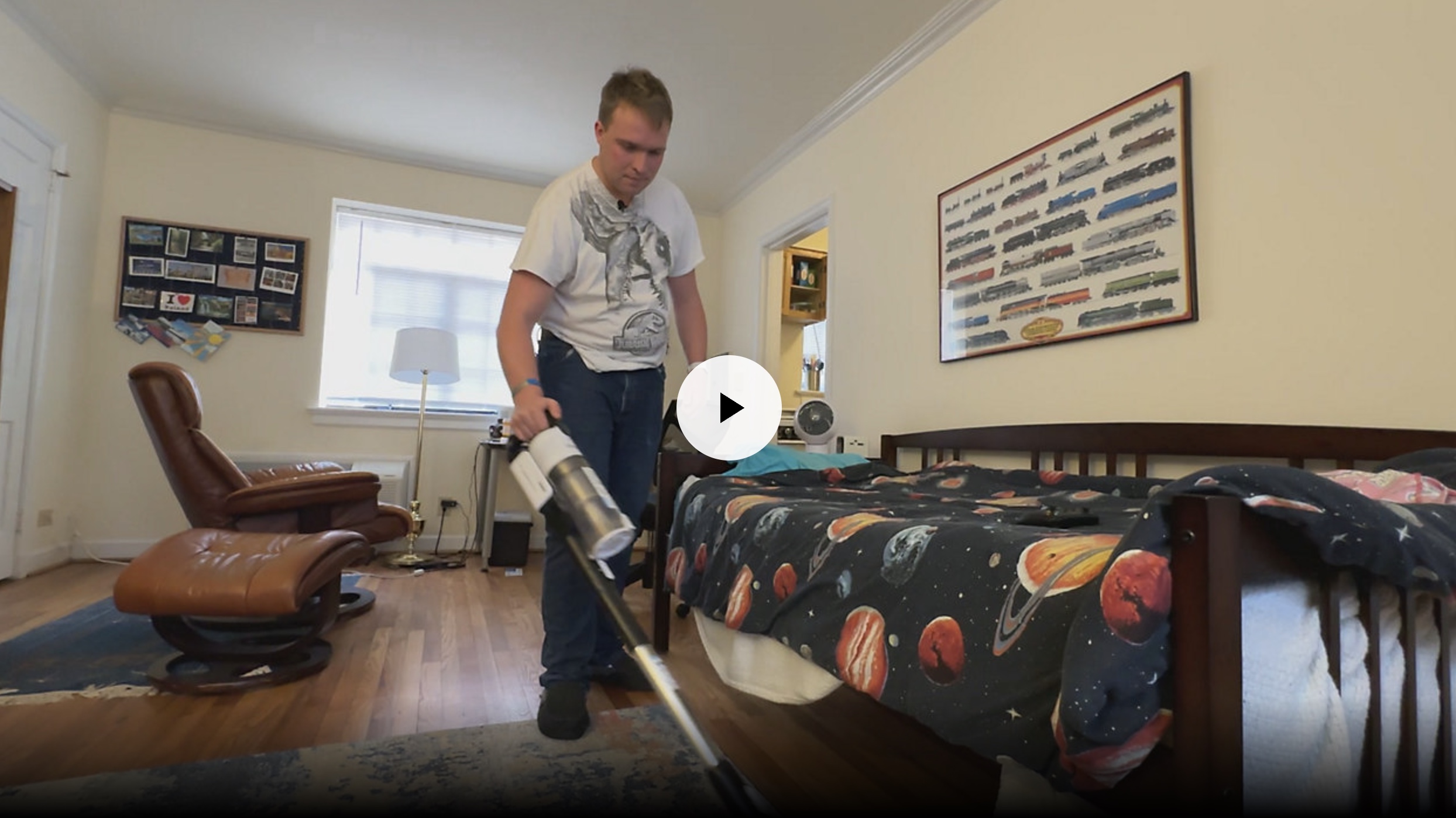
Residents like John Pendzich are living independently for the first time.
When he walks into his apartment, the small, everyday moments carry meaning. On a given day, the 27-year-old may find himself playing video games, checking his email, going out for exercise or heading to work at Harris Teeter. Most importantly, he decides what his day looks like.
“It’s going great,” Pendzich said. “I feel more confident I can live by myself here.”
Inclusive housing with support
Grosvenor Gardens is a traditional apartment community where residents with IDD live side by side with neighbors without disabilities. Support services are available to help the residents, many of whom rely on Social Security income.
Alliance Health will often help subsidize their rent or access federal vouchers that pay a portion of it.
“Across the country, we're seeing more of these community-based wraparound services that take people out of institutions and out of hospitals and out of group homes,” said Ann Oshel, senior vice president of Alliance Health, which also committed over $400,000 in a capital investment to create the units.
After moving out of his parents’ home, Pendzich said he had to adjust to new responsibilities. Cooking was one of the biggest challenges.
“Coming up with my own menu. Sometimes I do my own recipes,” Pendzich said. “One time I did a chicken quesadilla.”
Residents also receive support behind the scenes. A part-time community facilitator provided by Hope NC, a nonprofit that promotes inclusive housing with IDD, checks in regularly and helps residents navigate daily responsibilities. The facilitator also organizes weekly group outings to build social connections and help develop friendships.
“Having her there really does make a difference,” said Lauren Wells, director of Hope NC. “She gets texts and calls from them when they have questions that could provoke a lot of anxiety if they didn’t have someone to support and walk them through that.”
Hope NC also raised money to help the residents be more connected in the community. The money has paid for things like YMCA memberships, art classes and group activities like a trip to the movies.
“They don’t often have any disposable income to kind of be out and about,” said Wells. “That fund really helps them to not just be stuck at home.”
Growing need across North Carolina
The need for housing like this far exceeds the supply.
Estimates vary for how many adults with IDD live with a caregiver who is their family member. Some numbers are as high as 80%.
Many of those caregivers are aging and worried about a future when they may not be able to provide support.
Pendzich said it is a topic his now-retired parents have discussed with him.
“They do say that I should do those things because when they’re gone I’ll have to take care of things by myself,” he said.
Now that he has learned to live independently, he can't imagine going back.
When asked what he would say if his parents asked him to move home again, Pendzich paused.
“Uh, are you sure?” he responded.
Investment and expansion plans
Late last year, the city of Raleigh awarded over $3 million to support the affordable housing project at Grosvenor Gardens. A portion of that will go to infrastructure improvements, including replaciystem and roof.
Leaders with Alliance Health and Hope NC say they are working to expand similar housing models in other communities across North Carolina.
Hope NC is in the middle of a project with Habitat for Humanity in Orange County.
The group is buying 10 duplexes in a mixed-income neighborhood they’re building. The plan is to rent those out to adults with IDD once the units are finished in spring.
For Pendzich and others with IDD, the housing represents more than an apartment. It represents independence and a future that feels more secure.
“It’s important for us all to remember that people of different abilities all want the same things and deserve the opportunity to have the lives that they want to be able to live,” Oshel said. “People lead their best lives in places like this.”